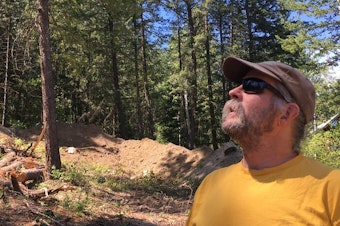
Ashley Ahearn

Environmental Reporter

Pages

Volunteers Help Scientists
9:58 am
Fri January 18, 2013

Searching The Olympic Forest For The Elusive Marten

Credit Michael Murray
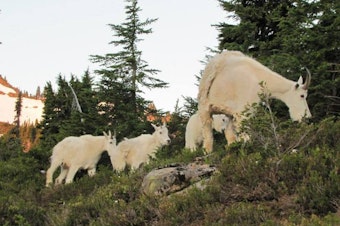
Volunteers with Adventurers and Scientists for Conservation set up motion-activated cameras in remote parts of Olympic National Forest in search of the American Marten.

The American marten is a small elusive member of the weasel family. People trap them and sell their pelts on the fur market where they’re known as “sable.” Their numbers are healthy across places like Canada and northern parts of the US, but scientists worry that marten populations have severely declined in coastal mountain ranges -- like the Olympic National Forest -- but they don’t know for sure. A group of volunteers is working with scientists to help monitor the martens and gather data to help determine their future.

Read more
Report: Flood Prediction
9:06 am
Tue January 15, 2013

What Climate Change Means For Seattle And The Northwest

Credit Port of Seattle
A new report suggests that by 2050, waters along sections of Elliott Bay levels could rise as much as 44 inches from current levels during storms.

City officials predict that by 2050 parts of Seattle will be under water at high tide as global sea levels rise. At a press conference held Monday on the edge of Elliott Bay near downtown Seattle, the City Council announced a new plan to take action on climate change.

Read more
Infrastructure Funding Strategy
9:17 am
Mon January 7, 2013

Talk Of A Carbon Tax In The Northwest

Credit Portland General Electric
Portland General Electric's coal-fired Boardman Power Plant along the Columbia River. it's among the greenhouse gas emitters in Oregon and Washington not subject to a carbon tax. Some Northwest policy makers want to change that.

Keeping up with transportation infrastructure isn’t cheap. The Washington State Transportation Commission estimates that in the next 20 years around 200 billion dollars needs to be put towards the maintenance of roads, ferries and more. But how to pay for that? Some are putting forward the idea of a tax on carbon emissions.

Read the whole story on KUOW’s Earthfix

Environment
9:00 am
Thu December 27, 2012

The Next Act For Clean Water

Credit Flickr photo/Ibrahim Areef
What is the future of clean water?

The Clean Water Act turned 40 this year. What has it accomplished? Where would we be without it? And what will the next 40 years look like for clean water in this country? Weekday presents a special broadcast produced by KUOW's EarthFix and Living On Earth from Public Radio International.

Read more
Coal Port Hearing
7:18 am
Fri December 14, 2012

Strong Opposition In Seattle For Gateway Pacific Terminal

Credit Michael Werner
Opponents of plans to build coal export terminals in the Northwest waved their signs in support of comments made at the coal export hearing in Seattle.

More than 2,000 people showed up Thursday to tell regulators what they think should be considered in the environmental review of a proposed coal export terminal near Bellingham, Wash. If built, it could be the largest such facility on the West Coast.

Read more
Coal Terminal Conversations
9:30 am
Wed December 12, 2012

Where Coal Divides, Community Remains

Credit Ashley Ahearn
Lisa McShane and Mark Lowry are long-time Bellingham residents and friends. They disagree on the issue of exporting coal but they're still talking about it

Exporting coal via the Northwest has become an issue so divisive that old friendships and alliances strain under the pressure. No matter how you feel about climate change or construction jobs or any number of issues bound to the five coal export terminals under consideration around the Northwest, chances are you know someone who feels differently about the issue than you do.

Read more
Environment
8:41 am
Wed December 5, 2012

Oil Trains On The Rise In The Northwest

Credit Katie Campbell
Ann Jones watches a train pass in front of her home outside of Bellingham. Trains carrying oil through the Northwest are on the rise.

As regulators in the region weigh the potential impacts of trains full of coal moving along the Columbia River and the shores of Puget Sound, trainloads of oil are quietly on the move. There are billions of barrels of oil in the Bakken shale formation – located in North Dakota and Montana mainly. And some of that oil is now making its way to refineries in Puget Sound.

Read more
Environment
9:20 am
Wed November 28, 2012

Acidifying Water Takes Toll On Northwest Shellfish

Credit Katie Campbell
Taylor Shellfish crews haul out oysters from Samish Bay that had been picked the night before. The Northwest's shellfish industry is one of the first to feel the impacts of ocean acidification.

Rescuing shellfish from the rising acidity in Puget Sound will require a wide-ranging response: everything from curbing greenhouse gases and controlling water pollution to growing more seaweed and putting restaurant-discarded oyster shells into shallow bays. Those are among the recommendations in a long-awaited report on ocean acidification that was delivered today to Washington Gov. Chris Gregoire by a blue-ribbon panel.

Read more
Environment
9:42 am
Tue November 6, 2012

New Report: Coal Terminal Means Traffic In Seattle

Government agencies have begun the environmental review process for the largest proposed coal export terminal in the Northwest. It would be located near Bellingham, Washington.

If it’s built, the Gateway Pacific Terminal would draw trains from across the region, carrying coal from Wyoming and Montana to be exported to Asia, and those trains would move through Seattle. That would lead to more traffic, according to a new report from the Seattle Department of Transportation.

Read the full story on KUOW's Earthfix

Environment
5:10 pm
Tue October 30, 2012

New Report: Puget Sound Ports Curb Emissions

Air pollution from the major shipping ports in Puget Sound has decreased, according to a new report released Tuesday. The 300-page report compared emissions of diesel particulates, greenhouse gases and other air pollutants in five Puget Sound ports from 2005 to 2011. Overall, emissions have gone down.

Read more

Pages