Joseph Shapiro

Joseph Shapiro is a NPR News Investigations correspondent.

In this role, he has reported a series on campus sexual assault, wrote about the oil spill in the Gulf of Mexico, reported on the failure of states to live up to a new legal responsibility to help people leave nursing homes and get care at home, and told the forgotten story of a small Navy ship that was sent back to Vietnam at the close of the Vietnam War and started the rescue of 20,000 to 30,000 refugees.

Joining NPR in November 2001, Shapiro spent the next eight years covering health, aging, disability and children and family issues on the Science Desk. He reported on the health issues of veterans returning from Iraq and Afghanistan and helped start NPR's 2005 Impact of War series with reporting from Walter Reed Army Medical Center and the National Naval Medical Center.

As part of that series, Shapiro covered the moment a U.S. Army helicopter pilot walked on new prosthetic limbs for the first time, the story of a soldier with a severe head injury trying to relearn simple tasks, and a soldier with PTSD who returned to his impoverished neighborhood in Brooklyn and struggled to find life-saving social services.

While covering Hurricane Katrina in 2005, Shapiro and NPR Producer Anna Vigran went into New Orleans with the government team that sent up medical triage tents. He reported on elderly people with dementia who were evacuated to distant cities, even though they had to way for family to find them. He continued to report on the Hurricane Katrina diaspora; in 2007, he helped reunite a homeless man with his mother, who had not heard from him in five years and was afraid he died in the storm.

Before coming to NPR, Shapiro spent 19 years at U.S. News & World Report, writing about healthcare and medicine, aging and long-term care, disability and chronic illness, children and families, poverty, civil rights, and other social policy issues. He also served as the magazine's Rome bureau chief, White House correspondent and congressional reporter.

For his work in investigative journalism, Shapiro has received honors from the Society of Professional Journalists for public service, the Casey Journalism Center for Children and Families for coverage of disadvantaged children and he was a finalist for the Goldsmith Award from Harvard University's Joan Shorenstein Center on the Press, Politics and Public Policy. Among recent honors for his coverage of disability issues, he was inducted in the National Spinal Cord Injury Association's Spinal Cord Injury Hall of Fame in 2006. Shapiro received the first "Judy Woodruff and Al Hunt Award for Media Excellence" from the American Association of People with Disabilities in 2008; and was honored by TASH in 2009 and Mental Health America in 2010.

Shapiro is the author of NO PITY: People with Disabilities Forging a New Civil Rights Movement (Random House, 1993 / Three Rivers Press, 1994).

Shapiro studied long-term care, chronic care, and aging issues as a participant in the yearlong 1997 Kaiser Media Fellowship in Health program. In 1990, he explored the changing world of disabled people as an Alicia Patterson Foundation Fellow.

Shapiro attended the Columbia University Graduate School of Journalism and Carleton College. He's a native of Washington, D.C., and lives there now with his family.

Shots - Health News
10:35 am
Wed January 16, 2013

Why A Young Man Died In A Nursing Home, A State Away From His Mom

Credit Courtesy of Nola Sayne
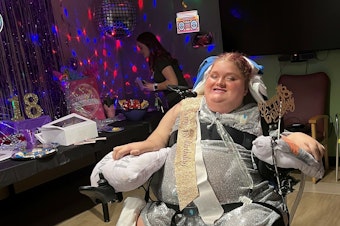
Zach Sayne at age 5, with his mother Nola.

Originally published on Thu January 17, 2013 1:12 pm

Zach Sayne was 25 when he died earlier this month at the place that had been his home for 15 years — a children's nursing home in Alabama.

But that was too far away, 200 miles too far, for his mother in Georgia. Nola Sayne was trying to bring him back, closer to her home. The story of why she couldn't reveals the bureaucratic traps, underfunding and lack of choices that plague state Medicaid programs.

Read more
NPR News Investigations
12:16 pm
Fri December 21, 2012

Dismissed Case Raises Questions On Shaken Baby Diagnosis

Originally published on Fri December 21, 2012 6:21 pm

When San Francisco prosecutors dismissed charges against Kristian Aspelin in early December, it became just the latest case to raise questions about how shaken baby syndrome is diagnosed. Aspelin, who was accused of causing the death of his infant son, had one thing in his favor: He had enough money to pay for medical experts who cast doubt on the prosecution's theory.

Read more
Shots - Health Blog
8:22 am
Sun October 7, 2012

Spinal Surgery Company To Give Tissue Proceeds To Charity

Credit Spinal Elements
The maker of a new product for spine surgeons wants to make a splash by donating proceeds to two charities.

When a California company developed a product to be used in spinal fusion surgeries, the firm's president said he knew it faced a new "ethical dilemma," even noting a recent NPR news investigation questioning the high profits some firms were making from donated human tissue.

Read more
The Two-Way
12:36 am
Tue October 2, 2012

Brain-Damaged Man Wins New Trial In Two-Decades-Old Killing

Originally published on Tue October 2, 2012 10:08 am

Richard Lapointe confessed in 1989 that he stabbed, raped and killed his wife's 88-year-old grandmother two years earlier. But in the 23 years since, experts in criminal justice have come to better understand how sometimes people make false confessions — especially someone with brain damage, like Lapointe. On Monday, Connecticut's state Appellate Court ordered a new trial, saying prosecutors wrongly withheld potentially important evidence.

Read more