Ann Dornfeld
Reporter
About
Ann is a reporter on KUOW's Investigations team. Previously, she covered education stories for KUOW for a decade, with a focus on investigations into racial and socioeconomic inequities.
Her ongoing series exposing Seattle Public Schools’ lenient discipline of staff who abused students has won investigative reporting awards from the Society of Professional Journalists, the Radio Television Digital News Association, and the Education Writers Association. She was also lauded for her years of work covering disparities in the amount of recess and P.E. time students received in low-income schools.
Previously, Ann worked at Alaska Public Radio Network in Anchorage, and KLCC in Eugene, Oregon. Her freelance work, focusing on science and environmental issues, has appeared on national outlets including Morning Edition, All Things Considered, Marketplace and The World.
Ann’s marine and underwater photography has appeared in the American Museum of Natural History and the Oregon Museum of Science and Industry.
She lives with her husband and two children in South Seattle.
Location: Seattle
Languages Spoken: English
Pronouns: she/her
Professional Affiliations: Member, Investigative Reporters and Editors
Stories
-
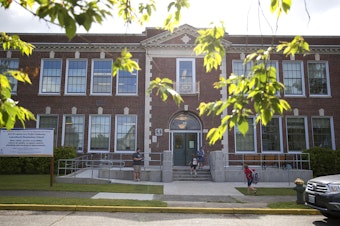
Seattle Schools to turn away nearly 1,000 students missing vaccine records
Seattle Public Schools plans to turn away students who have not met vaccination requirements today.
-

Seattle scrambles to vaccinate kids: 2,200 told not to come back without shots
Seattle is one of the districts now enforcing a longstanding state law that says students must be barred from school if they lack required vaccinations or exemptions.
-
2,600 Seattle students lack permanent housing
The Seattle Public School district estimates more than 2,600 students lack permanent housing. The YWCA is starting a new program to help these families find a stable place to stay.
-

Too white? A criticism of Seattle Public Schools gifted programs for decades
The disproportionate percentage of white students in gifted programs has become a hot topic in Seattle – and around the country – in recent years. But historical documents in the school district archives illustrate that this debate dates back generations in Seattle.
-

Bad grades? Can’t dance at Mercer Middle School in Seattle
A dance at a Seattle middle school has drawn criticism for excluding some students. And it raises questions about approaches to school discipline.
-
Affirmative action trails, but supporters still see positives
The affirmative action measure on Tuesday’s ballot was divisive in Asian-American communities. But some say the heated debate had a positive side.
-
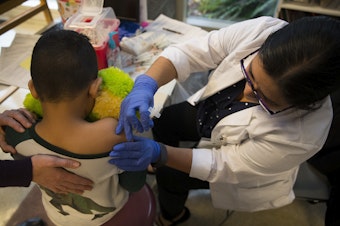
One-tenth of Seattle students could be kept home for missing vaccination records
Seattle Public Schools said it is missing immunization records for about one in ten students. The district sent letters to about 5,700 students’ families Oct. 28th notifying them that they will be barred from school beginning Jan. 8th if they still lack proof of the required immunizations, exemptions, or evidence that they are in the process of getting vaccinated.
-
One in ten Seattle Public Schools students could be barred for lack of vaccination records
Seattle Public Schools said it is missing immunization records for about one in ten students. The district sent letters to about 5,700 students’ families Oct. 28th notifying them that they will be excluded from school beginning Jan. 8th if they still lack proof of the required immunizations, exemptions, or evidence that they are in the process of getting vaccinated.
-
Recent test scores show widening performance gap in Seattle schools
Is the test part of the problem?
-

Students and parents protest racial slurs at north Seattle school
Parents and students held a protest outside Hazel Wolf K-8 STEM School in north Seattle today calling on school leaders to do more to respond to students’ use of racial slurs.