John Ryan
Environment Reporter
About
John Ryan joined KUOW as its first full-time investigative reporter in 2009 and became its environment reporter in 2018. He focuses on climate change, energy, and the ecosystems of the Puget Sound region. He has also investigated toxic air pollution, landslides, failed cleanups, and money in politics for KUOW.
Over a quarter century as an environmental journalist, John has covered everything from Arctic drilling to Indonesian reef bombing. He has been a reporter at NPR stations in southeast and southwest Alaska (KTOO-Juneau and KUCB-Unalaska) and at the Seattle Daily Journal of Commerce.
John’s stories have won multiple national awards for KUOW, including the Society of Professional Journalists' Sigma Delta Chi awards for Public Service in Radio Journalism and for Investigative Reporting, national Edward R. Murrow and PMJA/PRNDI awards for coverage of breaking news, and Society of Environmental Journalists awards for in-depth reporting.
John welcomes tips, documents, and feedback. Reach him at jryan@kuow.org or for secure, encrypted communication, he's at heyjohnryan@protonmail.com or heyjohnryan.10 on the Signal messaging app.
Location: Seattle
Languages: English, some Spanish, some Indonesian
Professional Affiliations: SAG-AFTRA union member and former shop steward; Society of Environmental Journalists member and mentor
Stories
-

The Stillaguamish Tribe gives its river north of Seattle room to roam
“Now the river can connect to its floodplain like it hasn't in 140 years.”
-

Warm winter liquidates nearly half of Washington state snowpack
Washington state’s snowpack held just 52% of its normal volume of water on Thursday, according to the U.S. Department of Agriculture’s Natural Resources Conservation Service.
-

Washington’s largest climate polluter shuts down despite federal order
The Pacific Northwest’s largest pollution source has shut down, and Washington state officials want to keep it that way.
-

Future of Washington state’s climate-pollution fund up in the air
Washington Gov. Bob Ferguson wants to slash spending on climate change as the state faces severe budget pressures.
-

Washington state’s climate-fighting claim is hot air, officials admit
Washington state officials have issued a correction after they were caught exaggerating the benefits of state spending to curb climate change.
-

Washington’s biggest polluter ordered to keep burning coal by Trump administration
Two weeks before Washington state’s biggest source of climate pollution was required to end its five decades of burning coal, the Trump administration has given it a new lease on life.
-

Flooding is a familiar foe on the Lummi Reservation
“We seem to be experiencing catastrophic flooding every few years,” Hillaire said.
-
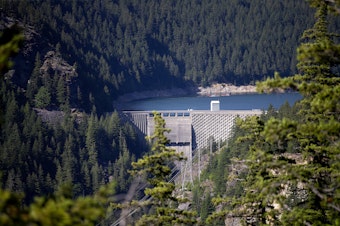
Army takeover of Skagit dams lowers flood waters
The Army Corps of Engineers was able to reduce flooding on the Skagit River with emergency operations of two hydropower dams upstream.
-

Northwest floods offer sneak peek of hotter climate's toll
“The science is clear that floods are going to become larger and more frequent in the future,” Washington State Climatologist Guillaume Mauger said.
-
Flooding in WA: Skagit County, Gov. Ferguson's emergency response and more
Catastrophic flooding continues to threaten Washington. We talked to three KUOW reporters about what they're seeing on the ground and what we need to know about this weather event.