Tom Banse
Regional Correspondent
About
Tom Banse covers national news, business, science, public policy, Olympic sports, and human interest stories across Washington state. Now semi-retired, Banse is an Olympia-based reporter with more than three decades of experience covering the Pacific Northwest. Most of his career was spent with public radio's Northwest News Network, but now in semi-retirement his work appears on multiple nonprofit news outlets including KUOW. His recent areas of focus range from transportation, U.S.-Canada borderlands, the Northwest region's planned hydrogen hub, and emergency preparedness.
Previously, Tom covered state government and the Washington Legislature for 12 years. He got his start in radio at WCAL-FM, a public station in southern Minnesota. Reared in Seattle, Tom graduated from Carleton College in Northfield, Minnesota with a degree in American Studies.
Location: Olympia
Languages: English, German
Stories
-

Pandemic gives Pacific Northwest whales a respite from din of underwater noise
American and Canadian marine scientists -- and one talented dog -- are seizing an unexpected opportunity presented by the coronavirus pandemic. They are...
-

Rural Washington counties seize opportunity to accelerate reopening
Given the opportunity to accelerate the restart of shuttered businesses and social activities, six counties in central and eastern Washington wasted no...
-

More than 100 Washington state parks on list to reopen, but Coast and Gorge excluded
More than 100 Washington state parks made the cut to reopen for day use beginning Tuesday, but aficionados of Pacific Coast and Columbia River Gorge getaways will have to wait a while longer.
-

Locals only, please. Reopening of some Washington state parks greeted by concern
Outdoor enthusiasts in Washington may be looking forward to the reopening of many shuttered state parks and public lands next week. But a few of Washington's most popular state parks could stay closed because the surrounding communities are worried about crowds and renewed disease spread.
-
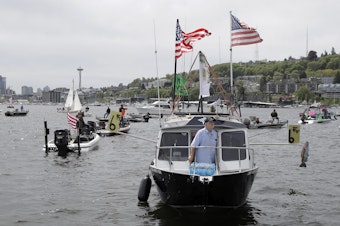
Outdoor enthusiasts greet news of reopening in Washington state with cheers of victory
Last weekend should have seen thousands of anglers flock to Washington state lakes for the always-popular lowland lakes trout opener. Like so much else, opening day of fishing season was canceled due to the coronavirus. But freshwater fishing is coming back soon, along with significant additional elements of the outdoor recreation scene.
-

'Drive-By Wi-Fi': Hotspots popping up to bridge digital divide amid virus pandemic
Distance learning, ordering groceries online or applying for unemployment, those are all kind of difficult without a good internet connection. So, at least seven public utilities spanning Washington state are setting up drive-up Wi-Fi hotspots amid the coronavirus pandemic.
-

Improvisation necessary for Pacific Northwest first responders facing Covid-19 threat
Coronavirus risk and ongoing shortages of personal protective equipment (PPE) are leading fire departments around the region to rediscover the enduring truth of the idiom, "Necessity is the mother of invention." Since the virus epidemic emerged in the Pacific Northwest, the fire service has changed tactics, improvised and resorted to creativity to keep first responders healthy and available to serve the public.
-

'Pretty humbling and enlightening,' says firefighter recovering from Covid-19
More than 500 firefighters and EMTs in the Pacific Northwest have been temporarily quarantined after suspected exposure to the coronavirus over the past two months. The Washington State Council of Fire Fighters and the Oregon Fire Service Coronavirus Response Team have been monitoring the number of first responders taken out of service. Fortunately, only a small fraction have tested positive for COVID-19, the disease caused by the novel coronavirus.
-

Surge in unemployment continues as clunky state systems await upgrade
Fresh numbers of initial claims for jobless benefits showed some moderation in the past week in the staggering wave of layoffs across the Pacific...
-

Tyvek house wrap tried out as alternative for critically-scarce protective gowns
Protective surgical gowns are one of the most scarce and eagerly sought items in the current coronavirus pandemic. Responders-turned-MacGyvers in at least three separate places, including two in Washington state, have independently hit upon a do-it-yourself alternative using common construction house wrap.