Seattle plan to enlarge tiny house villages passes key hurdle
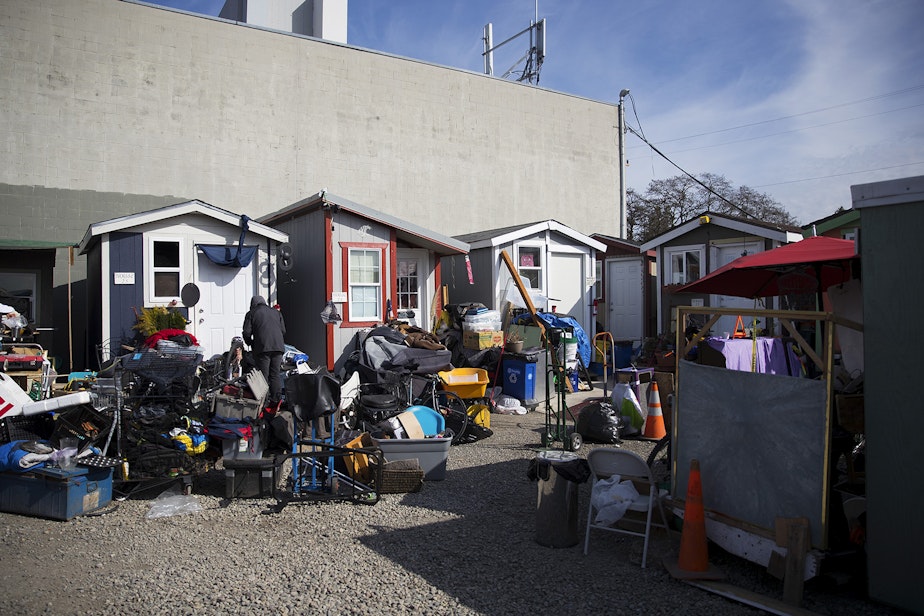

Should Seattle allow tiny house villages to grow much bigger, to help more unhoused people?
On Wednesday, a key city council committee said “yes.”
Right now, a tiny house village or an RV safe lot can’t house more than 100 people.
But Mayor Katie Wilson wants 1,000 more shelter beds this year and several villages have empty land next door they could expand on, were it not for that limit.
RELATED: King County homelessness agency board votes to tighten purse strings following damning audit
A bill sponsored by Councilmember Dionne Foster would temporarily raise the cap to 150, with one site per district allowed to grow to 250.
The plan has evolved over time. The committee added rules requiring a safety plan, a city liaison for neighbors to contact, two round-the-clock onsite staff, and a goal of one case worker per 15 residents.
Sponsored
Recent "walk on" amendments submitted by council members after a cutoff deadline aim to advance public safety further.
Councilmember Maritza Rivera's amendments would ban large camps near schools and parks and require 24-hour private security guards.
Despite the fact that they were not voted on during the land use committee meeting Wednesday, social workers, homeless advocates, and many others spent most of the public testimony period arguing against those ideas.
RELATED: Appeals court rejects HUD homelessness overhaul, saying it would be 'disastrous'
Anita Freeman is with the nonprofit group SHARE, which stands for Seattle Housing and Resource Effort.
Sponsored
“SHARE has 36 years of experience doing shelters and encampments safely without private security, many times near children and preschools and parks,” she said.
Others testified about the growing number of homeless children in Seattle, who would benefit from being close to schools and parks, and suggested private security guards may not be trained adequately in de-escalation techniques.
Councilmember Dan Strauss proposed another change: that larger camps would be divided into smaller neighborhoods of fewer structures, as a way of increasing the tiny house village residents' privacy and security. He said that does not mean internal fences; it could mean garden bed divisions.
Now that the bill is out of committee, the full council plans to vote on it later this month. That's also where the recent amendments will be further discussed.
RELATED: Rick Steves steps in to save Seattle-area hygiene center serving homeless residents
Sponsored
-
Joshua McNichols

Reporter
As KUOW's Growth and Development reporter and co-host of KUOW's Booming podcast, Joshua's "growing pains" beat sits at the nexus of housing, transportation, urban planning, government and the economy. His favorite stories also include themes of history, technology, and climate change.
More stories from Joshua McNichols »


