The great data center space race includes a small company in Redmond
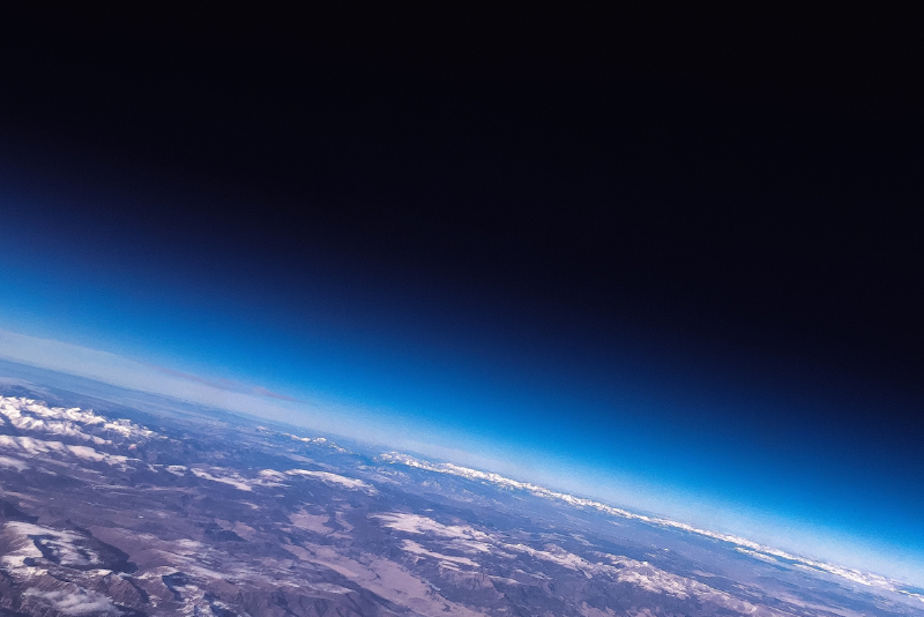

Elon Musk wants to put AI data centers in orbit. A company in Redmond beat him to it.
Elon Musk announced he had merged his rocket company, SpaceX, with his AI company, xAI, this week. His goal was to put data centers in orbit.
But a small company called Starcloud in Redmond has already launched one.
Starcloud's wisp of a cloud lives in a small box that orbits the earth. It runs Google's "Gemma" on an advanced NVIDIA chip.
"It's just like Google Gemini or ChatGPT," said Saadia Pekkanen, who teaches space law and diplomacy at the University of Washington, "except it says very interesting things like, 'I'm right now over Africa. In 20 minutes ,I'll be in the Middle East.'"
Sponsored
Starcloud-1 might be a simple box, but according to the company's website, Starcloud-2 will have large solar panels, unfurled like a red carpet to welcome the sun's energy.
Later, Starcloud-4 would look more like a central spine with several shipping-container-sized server nodes plugged into it.
Tech companies see space as a source of nearly unlimited cheap solar energy. Solar panels can be placed in "sun-synchronous orbit," meaning they're almost never in shade.
Pekkanen said competition for orbital space, especially in that orbit, is heating up.
"You have limited real estate," she said. "You have many companies which are interested, but also many countries that are interested. It’s not necessarily a free-for-all... but it will get congested."
Sponsored
That's one reason companies are racing to claim a spot in that orbit first. If you're there first, others must work around your satellites.
"So, there will be something of first-mover advantage in getting into space in these particular orbits and staying there," Pekkanen said.
Pekkanen warned that more satellites crowding each other in orbit will lead to collisions. Collisions can create debris fields that damage other spacecraft, snowballing into more crashes that can turn space into a chaotic field of junk flying at lethal speeds. She said companies must show they can safely dispose of satellites when they stop working.
So, do we need to worry about satellite parts falling on our heads here on earth?
"Objects fall out of orbit every day," she said. "The reason why you don't hear about is because most of the planet is water. We have, fortunately, not had any huge accidents like that, but pieces are beginning to sort of fall out of the sky in remote areas and have been doing that for decades. The fear is that this may accelerate as mega constellations [of data centers] go into space. And the bigger fear is that, if this happens, what do we do?"
Sponsored
Pakkanen said we need international agreements ensuring that space remains safe and usable by many nations in the future. For that reason, she hosts a Space Diplomacy Symposium every year at UW.
You can follow Dr. Pakkanen's work on her Substack, the Space Diplomacy Newsletter.
Hear more stories like this on KUOW's economy podcast, Booming:
-
Joshua McNichols

Reporter
As KUOW's Growth and Development reporter and co-host of KUOW's Booming podcast, Joshua's "growing pains" beat sits at the nexus of housing, transportation, urban planning, government and the economy. His favorite stories also include themes of history, technology, and climate change.
More stories from Joshua McNichols »


