Washington's last coal power plant will transition to natural gas
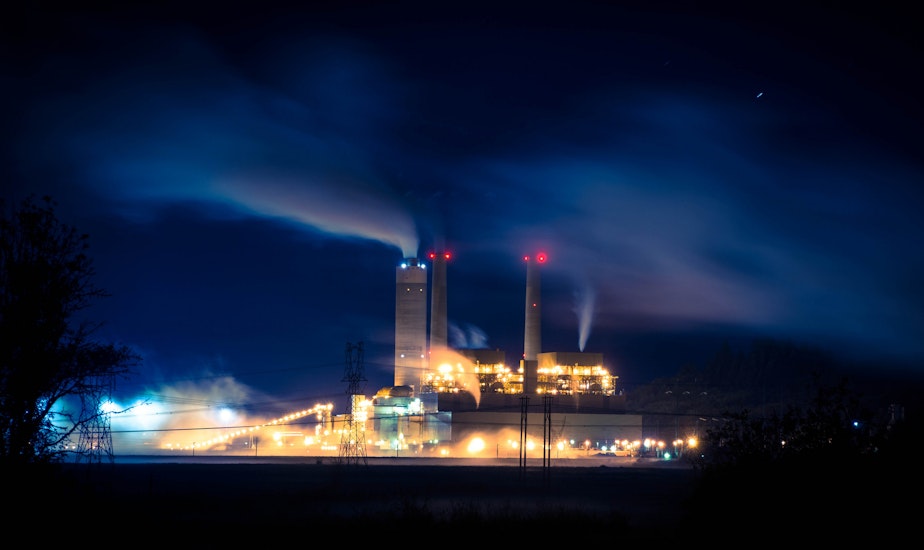

TransAlta Corporation has signed an agreement with Puget Sound Energy to switch the last coal-fired power station in Washington state to natural gas.
The deal, which TransAlta announced Tuesday, comes as the Centralia plant is set to fall silent at the end of the month.
Its closure is part of a deal the Washington Legislature approved in 2011. The winding down of the last coal-fired unit represents a long-sought goal for Democratic state politicians: the move toward cleaner energy to reduce fossil-fuel emissions and combat climate change.
But it also comes amid rising concerns that the state could face a power crunch as it makes that transition.
In a statement, John Kousinioris, president and chief executive officer of the Canadian-owned company, said the switch to natural gas “will lower the emission intensity profile of the facility by approximately 50 percent.”
“This project demonstrates the valuable role that legacy assets can play in supporting the State’s clean energy laws and system reliability in a cost effective and timely fashion,” added Kousinioris.
Sponsored
Under the agreement, the conversion will deliver 700 megawatts of power under a 16-year contract that runs through Dec. 31, 2044.
With California experiencing power disruptions as it switches to cleaner energy, some key Washington state officials have said they support adding natural gas to the facility.
In an interview conducted before the announcement, former Washington Gov. Christine Gregoire said she supported the company burning natural gas there as a backup while planned renewable energy projects around the state, like solar and wind power, get built.
During her tenure as governor, Gregoire, a Democrat, helped negotiate the agreement between TransAlta and the state that led to the winding down of the coal plant. She now serves on Puget Sound Energy’s board.
“Natural gas today is under the gun, but it is the backup for us … to avoid the brownouts, blackouts,” Gregoire said. “We do want to move to a clean energy future, but we have to do it in a way that we don’t deprive people and businesses and communities of the energy they so desperately need.”
Sponsored
She isn’t alone with that perspective. State House Majority Leader Joe Fitzgibbon — a key architect of Democrats’ clean-energy blueprint under Gregoire’s successor, former Gov. Jay Inslee — said he supports TransAlta putting a natural-gas facility there for the short-term.
Gov. Bob Ferguson’s office did not respond to emails seeking comment.
State Senate Minority Leader John Braun, a Republican from Centralia, said generating power through natural gas would help avoid California-style energy disruptions seen in recent years.
“We have to make the transition without hurting anybody,” Braun said.
‘Risk of power shortfalls’
Sponsored
The Centralia site had once included a neighboring coal mine, the largest such mine in Washington. By 2009, when Gregoire signed an executive order on climate change that declared an intent to strike a deal with the company, that mine had already shut down.
“They were having to bring coal in, there were all kinds of pressures,” Gregoire said. “Whether that was a safety issue, a health issue, whether that was a good economic future for the people of Lewis County.”
Subsequent negotiations led to the 2011 agreement being passed by the Legislature. The agreement spelled out the coal plant’s decommissioning by the end of 2025 and secured the company an expedited consideration for a gas-powered facility.
The deal also secured $55 million from TransAlta to be spent on several things, including energy efficiency and economic development projects for the Centralia-area community.
“You can shut it down, and walk away, but what you leave behind is untenable,” Gregoire said. “So it was really about trying to find the right way in which to leave the opportunity to help those people who would be out of a job, to retrain. And a new vision for Lewis County.”
Sponsored
A recent study commissioned by Puget Sound Energy, Seattle City Light, Avista, Tacoma Power and others contends that Washington is already on the cusp of an electricity crisis.
The shift toward wind and solar has prompted the region to retire fossil fuel power faster than it has been replaced, according to the report released in September.
“Adding weather-dependent resources without balancing them with reliable backup has left the grid more exposed to extreme conditions,” it stated.
The region “is going to have to add natural gas peaking plants as a critical backstop for reliability when the sun isn’t shining or the wind isn’t blowing,” Matt Steuerwalt, a senior vice president with Puget Sound Energy, said in a statement.
“A key finding is the region is at risk of power shortfalls, which could lead to rolling blackouts during extreme conditions, such as a winter cold snap during a very low [hydropower] year,” Steuerwalt said, citing that study. “This is a problem now — not 2030 or 2045, though it will get worse as demand continues to grow and more legacy power plants shut down.”
Sponsored
In an email, state Senate Majority Leader Jamie Pedersen, D-Seattle, said officials continue to work “on speeding the transition to clean energy by increasing solar and wind generation; making our grid more efficient; and exploring technological solutions such as demand management to reduce peak period electricity demand.”
“I suspect that we will also be extremely cautious about approving major new drains on the grid, such as data centers, that do not bring along dedicated generation facilities,” Pedersen added.
In an interview, Fitzgibbon, the state House majority leader, said he’s not opposed to TransAlta’s shift to natural gas. Fitzgibbon previously chaired the House’s energy and environment committee and sponsored the low-carbon fuel bill that passed in 2021. That was a key part of Democrats’ ambitious plans to reduce carbon emissions that passed under Gregoire’s successor, former Gov. Jay Inslee.
The envisioned TransAlta natural-gas facility, Fitzgibbon said, wouldn’t be expected to operate decades into the future like brand-new construction. The lawmaker added that he isn’t aware of any law that the Legislature would need to change to allow the project.
“Having coal out of Washington power is a huge milestone,” Fitzgibbon added.
Braun, the Republican state Senate minority leader, also called the TransAlta property the second-best place in the state for the next generation of nuclear energy, behind the Hanford nuclear site in central Washington.
Under federal oversight, nuclear projects take many years and potentially decades to come to fruition. Braun urged Washington to pursue that option in Centralia, as well: “I’d like to see us get into that sooner and not later.”
This story was originally published by the Washington State Standard.
Editor’s note, 12/18/25: This story was updated to note that former Washington Gov. Christine Gregoire now serves on Puget Sound Energy’s board.


