Alec Cowan
Senior Podcast Producer
About
Alec Cowan is a senior podcast producer at KUOW, where he works on Booming and other podcast projects.
Alec has worn many hats at KUOW. He helped launch Soundside and brought many eclectic stories to the program, from a late-night patrol with real life superheroes to the sewing machine sounds of an artisanal sail loft. Additionally, he was previously a producer for The Record with Bill Radke and the Primed podcast.
Before joining KUOW, Alec worked in NPR's Story Lab, where he helped pilot the Louder Than a Riot podcast and assisted in producing a story on volunteerism in Iraq for Rough Translation. Originally from Grand Junction, Colorado, his roots in the Northwest begin in Eugene, where he studied English and philosophy at the University of Oregon and worked as a news reporter for NPR member station KLCC. He is likely neglecting his saxophone, growing book collection, and expanding personal project list in favor of boosting his online Xbox ranking.
He's proud to be KUOW's unofficial "boat guy."
Location: Seattle
Languages Spoken: English
Pronouns: he/him/his
Podcasts

Stories
-
Rising from the deep: How the Kraken broke the ice on hockey in Seattle
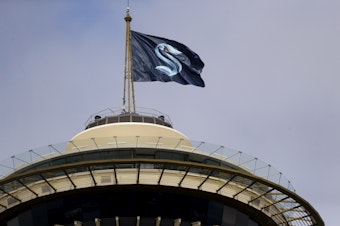
In 2018 the National Hockey League approved an expansion team for Seattle. Early on there were several ideas for a name, from the Totems to the Metropolitans, before eventually settling on The Kraken. The Kraken's first season left a lot to be desired – they won just 27 games. But the fact that Seattle now hosts the NHL's 32nd franchise marks the end of a long road that took decades of planning.
-
As elections near, Spokane sees growing interest in ballot systems
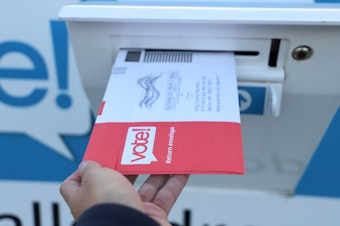
Certified election observers from political parties are not new. But the appearance of self-deputized election watchers seems to be a growing trend. That includes Spokane County, where local Republican politicians have called for audits of the previous election and activists are training citizens to become ballot box observers.
-
Meet the Royal Guard, the OL Reign's most dedicated supporters
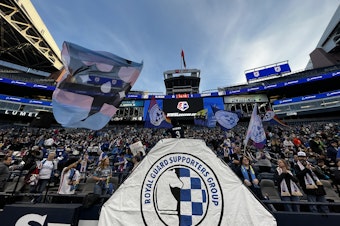
For the OL Reign, it's been a decade-long journey to Lumen Field. The team initially played at the Starfire Sports Stadium in Tukwila before moving to Memorial Stadium at the Seattle Center. Then there were three seasons at Cheney Stadium in Tacoma before returning to Seattle. This last weekend marked the first playoff game for the Reign in their new home, and more than 21,000 fans filled the seats. While this post-season journey ended in disappointment, The Royal Guard say they're just getting started.
-
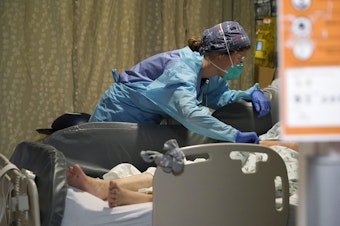
Pinched for staff, this Kitsap ER nurse called on firefighters to step in
On the night of Saturday, Oct. 8, firefighters were called in to help on the Kitsap Peninsula, but it wasn't because of a fire. Instead, an overwhelmed nurse at the ER at St. Michael Medical Center in Silverdale requested firefighters' help for managing patients.
-

Pirates, gentrification, and the future of living aboard on Puget Sound
While many Puget Sound sailors are hobbyists, a lot of them live on their boats. And as prices rise across the region, there's a wave of new mariners looking to find affordable housing options on the water. But life on the Salish Sea is arduous, and not completely free of the problems we run into on land.
-
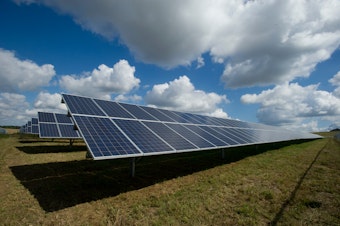
Washington is ripe for solar energy development. But where should it go?
Central and Eastern Washington are the sunniest areas of the state, with several large solar farms already in place. But as the energy grid overgoes a
-
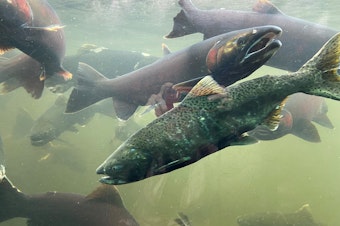
As sockeye salmon boom in Alaska, is there a lesson for us in Washington?
This year, more than 78 million sockeye salmon returned to the estuaries of Western Alaska, a record high and a stark contrast with most salmon populations elsewhere as urban infrastructure and rising water temperatures threaten numerous species. University of Washington professor Daniel Schindler told Soundside that sockeye salmon have been climate change winners in recent years, but why is still an answer researchers are seeking an answer to.
-
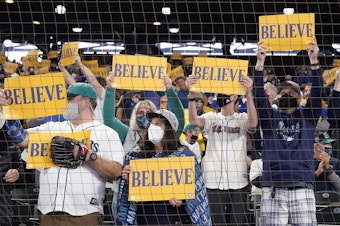
Heart and sole — the legend of the Mariner rally shoe
Improbable? Yes. Impossible? Not for the 2022 Seattle Mariners professional baseball team. On Saturday, the M’s turned an 8-1 deficit in Toronto into a 10-9 victory for the history books. In Seattle, at T-Mobile Park, Mariners fans who gathered for the team’s official watch party were asking for a miracle. And that's when a Birkenstock appeared on a man’s head.
-

Hear it again: the seedy side of America's favorite pastime
From sign stealing, to adding just a little bit of extra spit on the ball, professional baseball has created plenty of ways to fool crowds and umpires.But there's a fine line between the written and unwritten rules of the game.It makes you wonder, where is the line between innovation and cheating in baseball?
-

How technology is mapping the unheard conversations of our natural world
When you step into a forest, or walk along a beach, there's a lot to take in -- the sound of waves, crashing against the sand, birds chirping to each other in the trees. But there's a lot we don't hear