Alec Cowan
Senior Podcast Producer
About
Alec Cowan is a senior podcast producer at KUOW, where he works on Booming and other podcast projects.
Alec has worn many hats at KUOW. He helped launch Soundside and brought many eclectic stories to the program, from a late-night patrol with real life superheroes to the sewing machine sounds of an artisanal sail loft. Additionally, he was previously a producer for The Record with Bill Radke and the Primed podcast.
Before joining KUOW, Alec worked in NPR's Story Lab, where he helped pilot the Louder Than a Riot podcast and assisted in producing a story on volunteerism in Iraq for Rough Translation. Originally from Grand Junction, Colorado, his roots in the Northwest begin in Eugene, where he studied English and philosophy at the University of Oregon and worked as a news reporter for NPR member station KLCC. He is likely neglecting his saxophone, growing book collection, and expanding personal project list in favor of boosting his online Xbox ranking.
He's proud to be KUOW's unofficial "boat guy."
Location: Seattle
Languages Spoken: English
Pronouns: he/him/his
Podcasts

Stories
-

Hear It Again: Barriers to Recreation
Soundside talks to Rico Bembry of the Black Washingtonians Workgroup on Recreation, about the challenges faced by communities of color as they enjoy the outdoors.
-

Hear It Again: Seattle Mountain Rescue
Soundside talks with David Dunphy of Seattle Mountain Rescue about their mission, and their new headquarters in North Bend.
-

Space, our final dumping ground. Can we clean it up?
Last week, U.S. Senator Maria Cantwell (D-WA) introduced a new bill calling for the removal of "space junk." The Orbital Sustainability Act, or the ORBITS Act, aims to promote the development of technology and methods to clean up rocket and satellite debris orbiting Earth.
-

A national railroad strike was averted, but remains possible as unions vote this week
The Biden administration helped broker a tentative deal that will affect 120,000 rail workers across the country. While many are celebrating the aversion of a potentially disastrous shutdown, some workers have reservations about the new deal. And with a worker vote set for Thursday, rail companies are not out of the tunnel just yet.
-

Seattle's urban forest is shrinking. How can it grow?
In 2007, Seattle's urban forest management plan set a goal for 30% of the city to be canopied, meaning covered with urban trees. However, a recent report from the city showed that Seattle's canopy actually decreased by 1.7% over the last five years -- an area roughly the size of Green Lake.
-

Washington is starting new prescribed burns. Will they prevent bigger wildfires?
It's been close to two decades since Washington state last did a "broadcast burn," a kind of prescribed burn that sweeps forest floors of potential fire fuel. Prescribed burns are gaining in use throughout fire-prone states as land managers look to imitate natural cycles and move away from a "no-burn" standard of management.
-

Washington judge finds Facebook violated campaign disclosure law
Washington V. Meta, brought to court by Attorney General Bob Ferguson against Meta, Facebook's parent company, concluded that Facebook ran local political advertisements throughout Washington state without properly disclosing information about who ran them. In response to Facebook's argument that the disclosure law is unconstitutional, King County Superior Court Judge Douglass North called it "very constitutional."
-

Hear it again: Two years after fire decimated Malden and Pine City, how are they rebuilding?
Two years ago this week, a massive wildfire in Eastern Washington nearly destroyed the towns of Malden and Pine City. The Babb Road Fire burned 15,000 acres and hundreds of buildings. While progress has been slow, the people of Malden and Pine City are rebuilding and charting a new path forward.
-
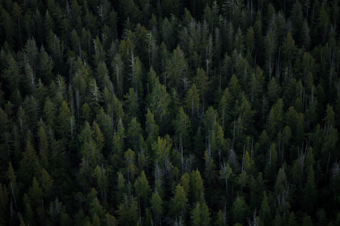
Can conservation work in the face of climate change?
There are many ways to protect and conserve land here in Washington. Aside from our national and state parks and forests, we have wildlife refuges and conservation areas. Altogether those boundaries include millions of acres. But there’s one tool at the state’s disposal that only covers a fraction of land, while protecting vitally unique flora and fauna. These are called "natural areas" and are protected by the natural areas program.
-

An increase in eco-blocks signals a battle between parking and encampments
Ecology blocks are large slabs made from recycled concrete, with grooves on the top and bottom to help form retaining walls. But on city streets and sidewalks, they form a different kind of barrier: Deterring RVs and encampments, which have proliferated in Seattle during the pandemic.