Libby Denkmann
Host, Soundside
About
Libby Denkmann has covered veterans' issues, homelessness, and local politics during her radio journalism career. She became the host of KUOW's Soundside in November 2021. Previously she was a producer, reporter, anchor, and host for stations KIRO, KFI, and KPCC in Seattle and Los Angeles. During a yearlong hiatus from journalism in 2011, she worked as a congressional staffer in Washington, D.C.. Libby was born in Seattle, grew up on the eastside, and graduated from the University of Washington. Her favorite things include soccer, video games, and her dog, Monty.
Location: Seattle
Languages: English, limited Japanese and Portuguese
Pronouns: she/her
Podcasts


Stories
-
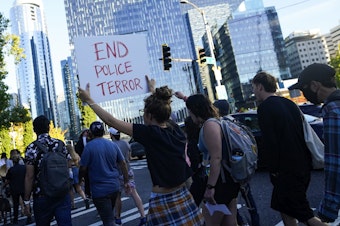
Following disturbing bodycam video, Seattle's South Asian leaders ask: 'Is that what they think of us?'
This weekend, protesters marched through South Lake Union, demanding accountability for Jaahnavi Kandula’s death. Kandula was struck and killed by a Seattle Police car in January. The renewed outrage comes after body camera video was released earlier this month showing a police union leader joking about Kandula’s death, saying “she had limited value.” This footage has led to public outrage and members of the South Asian community in Seattle met with Mayor Bruce Harrell and Police Chief Adrian Diaz over the weekend.
-
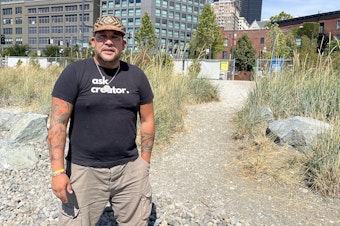
'Acknowledgement that this is their home': Seattle's Alaskan Way gets honorary Lushootseed name
Seattle’s waterfront is undergoing a massive transformation following the rerouting of interstate 99 from a now-demolished viaduct into a waterfront tunnel. That’s opened up space for a smaller surface road and a long and skinny 20 acre waterfront park.
-
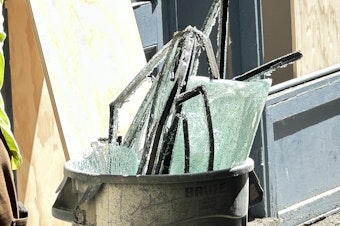
Police response time to Wing Luke Museum 911 calls raises questions about priorities
The Wing Luke Museum in Seattle’s Chinatown International District is closed today. The museum’s staff are still assessing the damage and trying to make sense of racist vandalism that occurred on Thursday evening, when a man with a sledge hammer smashed windows and said hateful things about Chinese people.
-
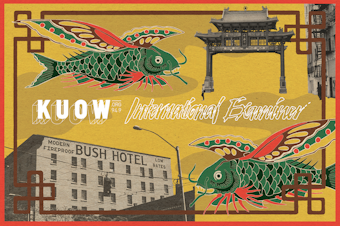
Exploring the meaning of community in Seattle's Chinatown-International District
The Soundside team has spent months in the Chinatown-International District, working with journalists from International Examiner to get to know the community better. Our hope is that you’ll come away with a deeper picture of what makes this neighborhood such a vital part of the city — and what the hopes and challenges are for the people here.
-
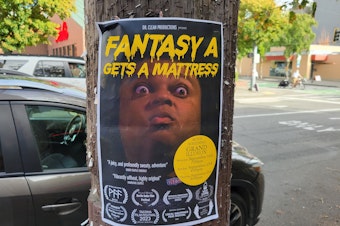
'Fantasy A gets a Mattress': Local low-budget movie gains momentum in Seattle
"Fantasy A gets a Mattress" is taking Seattle by storm. The movie, filmed in Seattle, won best narrative feature at the Seattle Black Film Festival back in April, and has sold out twenty screenings at the Beacon Cinema. Now, it’s been chosen as an official selection at upcoming events including the Seattle Film Summit, Poulsbo Film Festival, Local Sighting Film Festival and Tacoma Film Festival.
-

To lid or not to lid: Should I-5 be covered through the heart of Seattle?
Soundside host Libby Denkmann speaks with Seattle's Office of Planning and Community Development urban planner Lyle Bicknell about the proposal to create a lid on top of I-5.
-
After 11 years, Seattle's federal consent decree reaches the 'end of the beginning'
The decree came out of an agreement between the Department of Justice and Seattle Police in 2012, and included changes from officer supervision to how officers respond to people in crisis. Citing a decade of progress, federal officials moved to lift most of the consent decree from the Seattle Police Department.
-

In a battle of apex predators, Washington cougars are killing wolves at a surprising rate
Wolves may be an apex predator, but researchers in Washington recently noticed that they’re being attacked and killed by another carnivore at the top of the food chain: cougars.
-
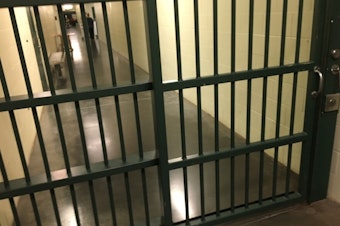
Hear it again: Incarcerated person explains the difference between jail and prison
Soundside host Libby Denkmann talks with incarcerated journalist Christopher Blackwell about how his 20 years in Washington State Prison compared to his time at Pierce County Jail.
-
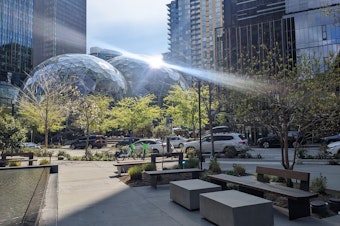
Why Amazon could be served another FTC lawsuit
Amazon is heading into yet another legal battle with federal regulators . The online retail and cloud computing giant reportedly didn't budge during final talks with the Federal Trade Commission ahead of an expected lawsuit from the agency. That cleared on of the final hurdles for the FTC to file an antitrust case against Amazon – possibly later this month.