Libby Denkmann
Host, Soundside
About
Libby Denkmann has covered veterans' issues, homelessness, and local politics during her radio journalism career. She became the host of KUOW's Soundside in November 2021. Previously she was a producer, reporter, anchor, and host for stations KIRO, KFI, and KPCC in Seattle and Los Angeles. During a yearlong hiatus from journalism in 2011, she worked as a congressional staffer in Washington, D.C.. Libby was born in Seattle, grew up on the eastside, and graduated from the University of Washington. Her favorite things include soccer, video games, and her dog, Monty.
Location: Seattle
Languages: English, limited Japanese and Portuguese
Pronouns: she/her
Podcasts


Stories
-
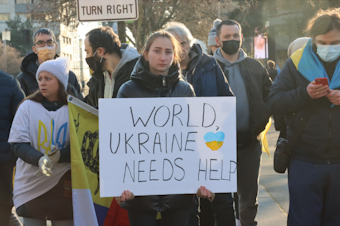
A year later, Ukrainian refugees' legal status creates roadblocks for resettling in the PNW
The U.N. estimates that at least 8 million Ukrainian refugees have been recorded across Europe. Before Russia’s invasion, the Taliban's takeover of Afghanistan prompted another refugee crisis. These global conflicts, among others, have triggered mass displacements on an unprecedented scale. Some folks are making it here. In the last year, Snohomish county alone has welcomed several thousand Ukrainian and Afghan refugees.
-
The lasting harm of Washington's deadliest mass shooting
The tragedy at the Wah Mee Club left 13 people dead 40 years ago. The way the story showed up in the news inflicted long term harm to the CID and Chinese American communities.
-

Artists vs. AI: where innovation meets unwelcome imitation
KUOW Arts and Culture reporter Mike Davis shares what he's learned about ChatGPT after interviewing a man who used the chatbot to write & publish a novel in less than eight hours.
-
Soundside goes live: Behind the scenes of 'Ghost Herd'
All six episodes of the series are out now, and Soundside host Libby Denkmann caught up with host Anna King, and producer Matt Martin to talk about reporting on one of the biggest cattle swindles in U.S. history.
-

Siblings of people with disabilities find connections through Sibshops
Sibshops started in Seattle over 40 years ago. Today they take place across the United States and around the world.
-

Could unidentified objects represent another 'Sputnik moment' in U.S. skies?
The White House says that the three flying objects U.S. fighter jets shot down last weekend were probably not spying on us — they could be benign, for research or commercial purposes. And, they originated on Earth (no aliens to see here.) That got us wondering — who’s finding these things? And why are they suddenly popping up so often, after the U.S. popped a much larger, suspected Chinese surveillance balloon earlier this month?
-

The Abstract: Stink bugs, penguins, and climate change, oh my
In this first episode of a new segment on scientific research in Washington state that we're calling "The Abstract," we’re exploring new revelations about how animals adapt to climate change and what that tells us about the future of ecosystems, including an unwelcome and foul-smelling new neighbor here in the Pacific Northwest, and an adorable Patagonian predator.
-

WA lawmakers consider options to make drivers ed more equitable
Today, 16- and 17-year-olds in Washington are mostly turning to private driver’s ed companies for traffic safety courses. Up until the year 2000, nearly every school district in the state offered a driver’s ed course. But those largely faded away after the Washington legislature cut funding in 2002. And now, lawmakers are trying to confront the ramifications of that decision.
-
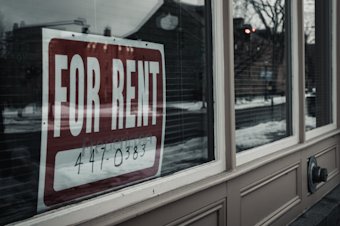
What's behind skyrocketing rents in Eastern Washington?
To find the fastest rent increases in Washington, you have to look outside of the major metro areas. Traditionally affordable places across the state are quickly pricing out minimum wage workers and retirees.
-
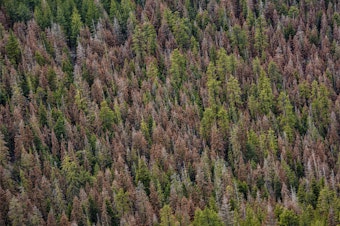
Washington state has a new carbon credit market. What does that mean?
In the face of climate change, some state governments are turning to an old standby: market-based solutions to try to lower carbon emissions. With the first carbon credit auction set to take place in Washington, how will the state balance industry with conservation?