Libby Denkmann
Host, Soundside
About
Libby Denkmann has covered veterans' issues, homelessness, and local politics during her radio journalism career. She became the host of KUOW's Soundside in November 2021. Previously she was a producer, reporter, anchor, and host for stations KIRO, KFI, and KPCC in Seattle and Los Angeles. During a yearlong hiatus from journalism in 2011, she worked as a congressional staffer in Washington, D.C.. Libby was born in Seattle, grew up on the eastside, and graduated from the University of Washington. Her favorite things include soccer, video games, and her dog, Monty.
Location: Seattle
Languages: English, limited Japanese and Portuguese
Pronouns: she/her
Podcasts


Stories
-

Turning up the heat on gas appliances: why federal regulations could get tighter
For many Americans, the sound means something delicious is on the way. Roughly a third of U.S. homes have gas stoves. Climate scientists and some public health experts say that’s a problem: Burning natural gas contributes carbon to the atmosphere.
-
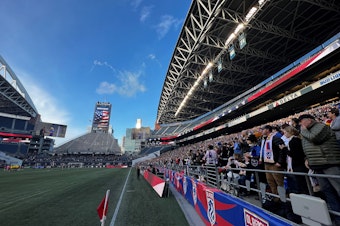
Hear It Again: Cheers and jeers — Seattle's year in sports
Today, we’re taking a look back on big moments for Seattle sports fans in 2022. Locally, the Mariners broke a 21-year playoff drought, Sue Bird played her last game for the Storm, Russell Wilson left for Denver, and the Sounders hosted — and won — the CONCACAF championship. But internationally, the year kicked off with a controversial Winter Olympics, hosted in China, and ended with a contentious World Cup and Qatar.
-
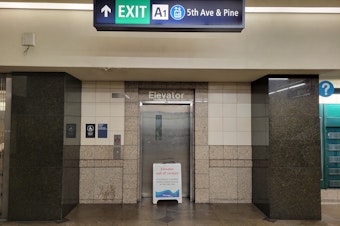
Hear It Again: Transit Woes
The Soundside team is taking some time off this week, and while we’re away, we’re revisiting some of the episodes that made us think about the way we move throughout our region. We’ll explore why the U.S. is one of the only wealthy countries to be moving in the wrong direction on traffic deaths. Plus, those escalators in the light rail stations, they’re still giving us grief!
-

Hear it again: The musicians and tastemakers that make the PNW's sound
2022 was a pretty great year for music. Even if your name isn’t Beyoncé or Taylor Swift. Today, Soundside is revisiting some of our favorite stories about the musicians and tastemakers that help shape the Pacific Northwest's sound.
-

Seattle shipwreck enthusiasts find possible site of the deadliest wreck in PNW history
The S.S. Pacific was packed full of passengers in 1875. It was charting the first steamship voyage from Seattle to San Francisco, before Washington had even achieved statehood. But after a collision with a sailing vessel called The Orpheus, the Pacific and its cargo was lost. Now after decades of searching, two local researchers think they've found it.
-

Sound it Out: Seattle graffiti update and a revisit to our electoral system
We're a show built around you – our listeners. Every other week, we bring you a segment called "Sound it Out," to broadcast your thoughts about the show and answer questions about stories we've covered. Today, we're looking back on our conversations with Mayor Bruce Harrell on graffiti in Seattle and why we vote for uncontested judges.
-

A 30-year-old movie that captured a singular moment in Seattle music history
After thee decades, Cameron Crowe's "Singles" is most remembered for its soundtrack.
-

Alison Mariella Désir found salvation through running. Now she's addressing its disparities
We’ve all heard the slogan: Just do it. And it’s so powerful, because it’s such a simple idea: just put on your shoes, go outside, and run. It’s that easy. But if you’re not white, it may not necessarily be true.
-
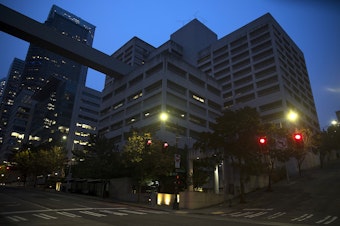
Why did a mental health crisis end in death for a 63-year-old Seattle man?
The press release simply stated that a 63-year-old man was found unresponsive in his cell minutes after being booked. But reporters Sydney Brownstone and Greg Kim of The Seattle Times went beyond the press release — they dug into this story, and uncovered a lot more about who Michael Rowland was and how he died.
-
Hear it again: Defying the odds, one patient at a time
Seattle author and doctor Patricia Grayhall went to medical school in the early 1970s, when gender discrimination and homophobia were commonplace in the field. Grayhall was forced to hide her identity as a lesbian and she faced sexism from superiors and colleagues.