Religious groups pressure retail pharmacies, including Costco, not to carry abortion drug
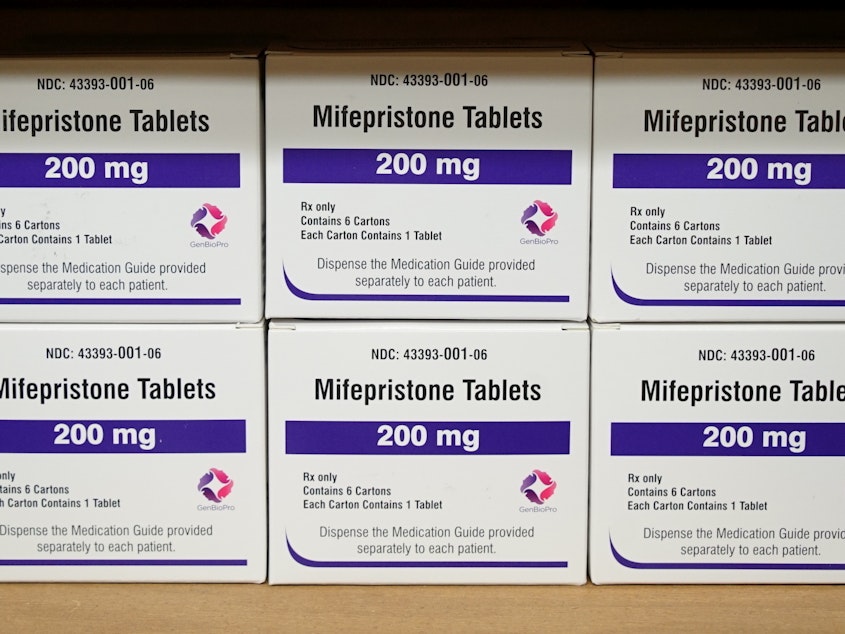

Religious organizations have ramped up their pressure on retail pharmacies to not carry mifepristone — the first of two drugs used in most medication abortions and to manage some miscarriages.
Since 2023, retail pharmacies have had the option to sell the drug, as long as they got a special certification. But very few pharmacies have that certification. And religious groups have targeted national pharmacy chains with campaigns against carrying the drug.
“We mobilized over 9,000 investors, members, and concerned citizens to sign a petition to Costco’s CEO asking him to consider the legal, moral, economic, and political controversy surrounding the dispensing of mifepristone,” reads a statement on the website of Inspire Investing, an investing company that says it “uses shareholder influence to uphold biblical values and protect the unborn.”
RELATED: How a network of women in Latin America transformed safe, self-managed abortions
Costco has now confirmed it will not sell mifepristone. The company said in a statement they don’t sell it because of lack of demand.
People used to have to go to their doctor’s office to get mifepristone. But in 2023, the FDA updated its regulatory guidelines allowing providers to prescribe the pills via telehealth, or to call a prescription into a certified pharmacy. But the latter option remains limited.
Sponsored
“For the average provider who is wanting to be able to prescribe mifepristone, it's not as easy as just asking a patient, ‘What is your best pharmacy and I will send a prescription there,’” said Dr. Sarah Prager, an OB-GYN at UW Medicine.
“A colleague who is not UW just messaged me in the past week or 10 days that they had tried a number of different pharmacies trying to get a mifepristone prescription to a patient who was miscarrying and none of those pharmacies carried the medication,” she added.
That’s in part because of complicated regulatory requirements that do not exist for any other medication. Each pharmacy that dispenses the drug needs a certification. Each provider who prescribes the drug needs a certification, and each provider needs a certification on file with each pharmacy they might want to send a prescription to.
“It's bureaucratically ridiculous,” Prager said. “I would have to fill out that form and have it sent to and approved by every different pharmacy from which patients want to pick up the medication.”
RELATED: U.K. Parliament bans women from being prosecuted for late-term abortion
Sponsored
These requirements “do not serve a medical or a biochemical or a scientific or a safety purpose,” Prager said. “They serve zero purpose other than to restrict access to the medication.”
Prager said she has three ways to get the drug to her patients. They can come to her office to get it; they can go to certain UW Medicine pharmacies to get it; or they can get it via telehealth.
Because of the restrictions on mifepristone, many providers still prescribe misoprostol alone for managing miscarriages, which Prager said goes against best practice.
“The data are very clear that there is higher efficacy if miscarriage is managed with both mifepristone and misoprostol,” she said. “So, we are doing patients a disservice if we are not offering them that as the evidence-based, standard-of-care practice for medical treatment of miscarriage.”
There is no definitive list of retail pharmacies that carry mifepristone, because even if a national pharmacy chain has the required certification, each individual location might stock the drug or not, and individual providers still need to have paperwork on file at a specific pharmacy location in order to call in the prescription there.
Since mifepristone is a prescription drug, the best way to get it is to first reach out to a certified provider, who can prescribe the medication and work with a patient on whether to come to a specific clinic to get it, get it mailed to their home, or find an appropriate pharmacy. Patients experiencing a miscarriage can work with their obstetric provider to get mifepristone, and patients seeking abortions can use a website maintained by Washington’s health department to find an abortion provider.
This story was updated at noon on Thursday, Aug. 21, 2025, to better clarify where and how to get mifepristone.
-
Eilís O'Neill

Reporter
Eilís is a reporter covering health. She focuses on health inequities, substance use and addiction, infectious diseases, mental health, and reproductive and maternal health.
More stories from Eilís O'Neill »


