Washington state progressives strike big business tax break from 'millionaire’s tax'


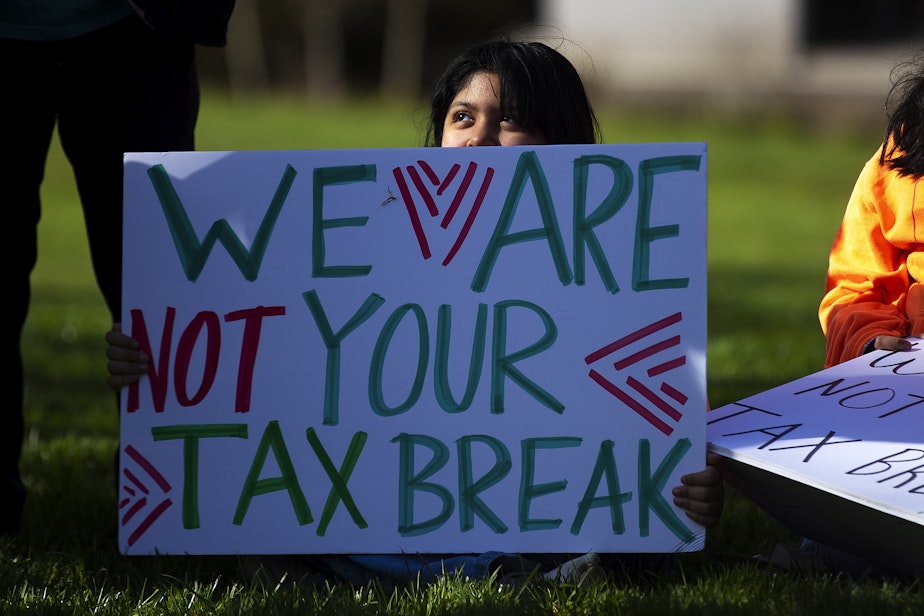
The Washington State House Finance Committee made revisions to a proposed income tax after a group of progressive lawmakers said the previous version gave away too much while not doing enough for working families.
A tax break that would have benefited big businesses has been removed from the latest version of a bill to tax incomes more than $1 million is being advanced by Democratic leaders. A group of 13 progressive lawmakers in the House pushed for those provisions to be stripped.
Rep. Shaun Scott (D-Seattle) authored the group’s letter to the chair of the House Finance Committee this week, protesting an early sunset of a business and occupation surcharge for corporations grossing more than $250 million a year. He wrote that the tax break would cost the state $550 million — more than cuts to education and child care would save in the governor’s supplemental budget proposal.

The Finance Committee on Friday adopted Scott’s amendment that removes that provision.
As the committee voted to recommend that what lawmakers refer to as an income tax on millionaires moves forward, Scott, a Democratic socialist in his first term, called it “a massive step in the direction of economic justice.”
Sponsored
RELATED: Supporters claim fraudulent sign-ins made Washington's proposed 'millionaire's tax' look unpopular
Democrats in the House committee also worked to put in a sales tax exemption for diapers and moved up a scheduled rollback of sales tax on technology services that the Senate had added.
The lead sponsor of the income tax bill, Sen. Jamie Pedersen (D-Seattle), has repeatedly hailed it as a solution to ensure families can rely on the state to provide services like health care, education, and schools while shifting the tax burden toward the wealthiest Washingtonians.
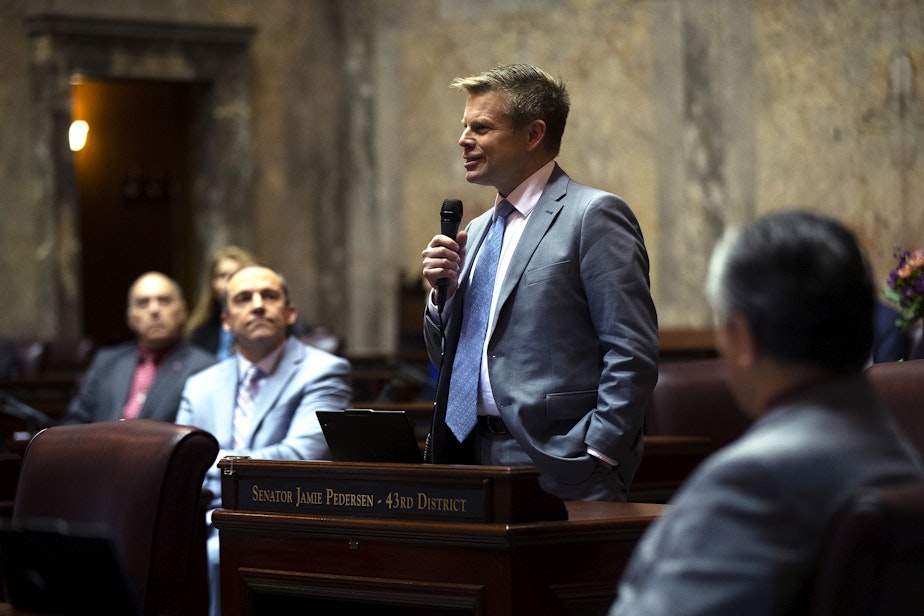
“Last year we ran squarely into the fact that we have a broken, upside-down, hundred-year-old tax system that is just not adequate to meet the needs of our state in the 21st century,” Pedersen said during a public hearing on the tax earlier this month. “That began a process for me to think about what would be a different way for us to solve this problem, and that’s how we got to the millionaires tax.”
Sponsored
Sponsored
Pedersen has said he doesn’t feel the latest revisions will hamper the bill’s progress to the governor’s desk. He added that the changes will ultimately be a wash for big businesses.
“I don’t have any concerns about those amendments,” Pedersen said.
The debate on the “millionaires tax” is happening as lawmakers start hammering out the final details of a state budget. Budget writers in both the House and Senate are counting on billions in revenue from the tax to cover the state’s operating expenses starting in 2029. Without the tax, the current supplemental budget plans included hundreds of millions of dollars in cuts to child care subsidies over the next four years.
News 20260224 Atcsmt Incometax2way
State government reporter Sarah Mizes-Tan talks to KUOW's Kim Malcolm about the origins of the income tax proposal and the differing concerns
Washington isn’t the first state in the country to consider the idea of an income tax on the wealthy. Massachusetts enacted an additional tax on households earning more than $1 million in 2022. California is currently considering a one-time 5% tax on wealth and assets of residents worth more than $1 billion. By comparison, some experts say this proposed tax in Washington isn’t a particularly progressive idea.
Sponsored
“A targeted rate on those who have been doing very well in recent years, and in many cases, for decades or generations, is just a sensible way for states to be able to raise the revenue they need to fund the needs of people and communities,” said Wesley Tharpe, a senior advisor for State Tax Policy for the Center on Budget and Policy Priorities, a progressive think tank.
RELATED: Millionaires' tax could ‘revolutionize’ WA education, OSPI chief says
An estimated 20,000 households would owe this tax on incomes more than $1 million — about 1% of the state’s population. That makes it a very volatile revenue source, according to critics like Jared Walczak, a senior fellow at the Tax Foundation. If high earners leave the state or have a bad year, he said, the amount of revenue generated could fluctuate dramatically.
“It’s not stable enough for what Washington intends to do,” Walczak said.

Joe Nguyen, a former Democratic lawmaker and the current president of the Seattle Metropolitan Chamber of Commerce, said he’s skeptical that this particular income tax proposal will result in better outcomes for Washingtonians who need access to education and health care. Washington is still facing a budget deficit, Nguyen points out, despite a spate of recent tax increases.
One way he thinks Washington could achieve a more egalitarian tax structure: enacting a universal income tax.
“It's not hard to come up with a plan to do a more fair tax structure,” he said. “I can probably write something like that in a weekend.”
But putting that into practice is much more difficult, Nguyen said. Washington voters have rejected income tax proposals 10 times in the past 90 years.
The income tax bill will move to the House floor for debate before returning to the Senate. Washington’s 60-day legislative session is scheduled to end Thursday, March 12.
Sponsored
-
Sarah Mizes-Tan

State Government Reporter
Sarah Mizes-Tan leads coverage of Washington state government for KUOW and KNKX and reports stories of people affected by officials’ decisions. Her work reaches audiences across Washington, Idaho, and Oregon through the Northwest News Network.
More stories from Sarah Mizes-Tan »


