The polar bears of Hudson Bay: cubs, climate, and calories, part 2 We learn about calorie counting for polar bears and what the future could look like for the Hudson Bay polar bear population. Chris Morgan
A new satellite could help clean up the air in America's most polluted neighborhoods A new satellite will take continuous measurements of dangerous air pollution in the U.S. That has scientists, and residents, warily optimistic about undoing decades of environmental injustice. Seyma Bayram
In some fights over solar, it's environmentalist vs. environmentalist The U.S. needs a lot more renewable energy to meet its climate goals. In some communities, the opposition to large solar projects comes from environmentalists themselves. Julia Simon
Climate change is causing people to move. They usually stay local, study finds Researchers looked at thousands of homeowners who moved out of flood-prone homes. Most stayed within a 20-minute drive, and their new homes were safer from flooding. Rebecca Hersher
Another three bite the dust: Heat melts Mount Rainier glaciers A warming climate has claimed three glaciers on Mount Rainier, home to more ice than any American mountain south of Alaska. John Ryan
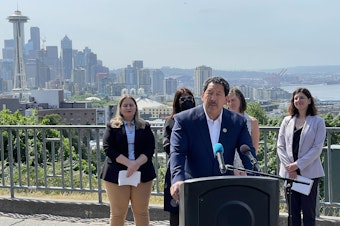
Seattle aims for cleaner buildings over next 25 years Seattle’s biggest buildings would have to reduce their impact on the climate starting eight years from now under a proposal announced Thursday by Seattle Mayor Bruce Harrell. John Ryan
3 lessons from the Western U.S. for dealing with wildfire smoke Living with unhealthy wildfire smoke is becoming more common across the country. Western states have learned some key lessons in how to deal with it. Lauren Sommer
El Niño has officially begun. Here's what that means for the U.S. The natural climate pattern known as El Niño has officially begun. It exacerbates human-caused climate change, driving even hotter temperatures and other dangerous weather. Rebecca Hersher
The Northwest is approaching 'peak dryness' much sooner than expected this year All the sunny days last month have added up to warmer soils and plants drying out more quickly. The driest part of the year usually hits in mid- or late-summer. Anna King
For tribes, welcoming salmon to the Upper Columbia is a reminder of ‘lifelong work’ Each Spring, Northwest tribes celebrate the first foods of the season. At a Colville ceremony marking the return of migrating salmon, ecological challenges were top of mind. Courtney Flatt