Libby Denkmann
Host, Soundside
About
Libby Denkmann has covered veterans' issues, homelessness, and local politics during her radio journalism career. She became the host of KUOW's Soundside in November 2021. Previously she was a producer, reporter, anchor, and host for stations KIRO, KFI, and KPCC in Seattle and Los Angeles. During a yearlong hiatus from journalism in 2011, she worked as a congressional staffer in Washington, D.C.. Libby was born in Seattle, grew up on the eastside, and graduated from the University of Washington. Her favorite things include soccer, video games, and her dog, Monty.
Location: Seattle
Languages: English, limited Japanese and Portuguese
Pronouns: she/her
Podcasts


Stories
-

Lawsuits accuse Boeing of failing to protect workers from toxic chemicals
In 1980, Deborah Ulrich worked as a “floater” at Boeing’s now defunct Electronics Manufacturing Facility. Back then it was located on the east side of the Boeing Field. She had a variety of tasks - dipping soldering boards in industrial solvents to clean them, and touching up patterns on circuit boards, among other duties. She was also pregnant with her daughter, Marie Riley.
-
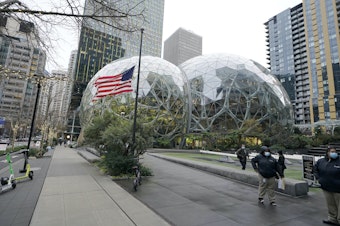
As tech companies announce layoffs, the clock is ticking for immigrant workers
As the global economy begins to slow, companies are dialing down the risk factor, which means more layoffs. And many of those workers in the Puget Sound area are in the U.S. thanks to one document: an H-1B visa.
-

What the potential end of the Indian Child Welfare Act could mean for tribal rights
Congress passed the Indian Child Welfare Act in 1978 to help remedy a long history of atrocities committed against Native American families. But now three states and several individuals are challenging the law in the United States Supreme Court, arguing it's unconstitutional. The challenge mostly hinges on a major question: whether tribal membership is a political designation or a racial identity.
-

What we learned from this year's elections
Political reporters can finally stop refreshing results from Clark counties, Nevada and Washington. Several races are still too close to call. But the big national picture of the midterms is starting to come into focus.
-

New Seattle council district maps will reunify some neighborhoods, split others
Every ten years, political district maps are reshaped based on the latest census data. Since 2013, that includes new district maps for Seattle City Council members. Growth throughout the city wasn't even, and in the case of Magnolia, some district lines won't fall evenly over traditional neighborhood lines.
-

What happens when a school levy fails?
In February of this year, the Kennewick School district, in Southeast Washington, ran a levy on the ballot in their county elections. That levy didn’t pass.
-

As Washington transitions off of fossil fuels, where will new power come from?
Our energy infrastructure is increasingly stressed by growing demand, extreme weather and aging parts. In the Puget Sound area utilities are also ramping up to comply with a state law that will require all electricity to come from clean sources. Those demands are setting up a massive transition in where our energy comes from, and where it will go in the future.
-

For the first time, James Baldwin's 'The Amen Corner' takes Seattle audiences to church
For the first time, James Baldwin's 1954 play "The Amen Corner" is being staged in Seattle, at the Langston Hughes Performing Arts Institute.
-
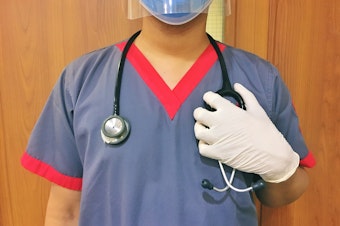
RSV is on the rise among children, but figuring out where is complicated
Emergency rooms at children's hospitals are seeing dramatic increases in admissions because of RSV and other respiratory viruses. But there are complications to tracking the virus in rural communities especially.
-
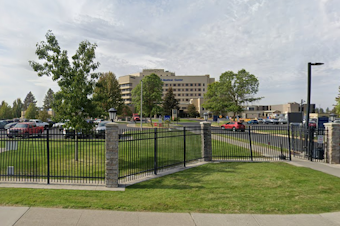
Delayed care, missed diagnoses plague VA health centers following adoption of new records system
Spokesman Review reporter Orion Donovan-Smith joins Soundside to talk about the many issues facing VA healthcare centers in Washington state, after they switched to the new Oracle Cerner electronic health records system.