Libby Denkmann
Host, Soundside
About
Libby Denkmann has covered veterans' issues, homelessness, and local politics during her radio journalism career. She became the host of KUOW's Soundside in November 2021. Previously she was a producer, reporter, anchor, and host for stations KIRO, KFI, and KPCC in Seattle and Los Angeles. During a yearlong hiatus from journalism in 2011, she worked as a congressional staffer in Washington, D.C.. Libby was born in Seattle, grew up on the eastside, and graduated from the University of Washington. Her favorite things include soccer, video games, and her dog, Monty.
Location: Seattle
Languages: English, limited Japanese and Portuguese
Pronouns: she/her
Podcasts


Stories
-

What does the new climate bill mean for Washington state?
Climate scientists say it’s now or never for governments to reassess their energy policies, before it’s too late to make a difference. The US is looking at doing just that. Earlier this month, congress passed the Inflation Reduction Act, which includes almost $370 billion dollars in climate provisions that could change how we get our energy. But will those investments bring us any closer to addressing climate change in an impactful way?
-

Hot air balloon crew takes hobby to new heights
Carolanne Walter grew up in Indianola, Iowa, home of the National Balloon Classic - a nine day hot air balloon festival held every summer. She's now the pilot of the "Happyanunoit," and along with her crew, has found a new passion in competing in national hot air balloon events. The team, known as the "Ballooney Tunes Crew," just took FIFTH PLACE at the US Women’s National Hot Air Balloon Championship out of a field of 14 pilots. That competition took place in conjunction with the National Balloon Classic in Indianola, where 115 balloons and their pilots took to the skies earlier this month.
-

Biden's student loan forgiveness plan provides more than just debt relief
There's a lot more to the White House's plan than debt cancellation for folks making under $125,000 per year, including a big change in how student loans rack up interest under some repayment programs.
-

What it takes to 'make it' in Seattle's hip-hop scene
Carving out a music career in any city is tough, and there are going to be highs and lows. But being a hip hop artist in Seattle comes with its own set of challenges.
-

'Take the politics out': Advocates urge CDC to improve public trust
From faulty Covid test kits and rapidly changing mask recommendations at the start of the pandemic, to confusion about how many vaccine doses make one fully vaccinated, the CDC's communication has been unclear during the pandemic.
-

The fraught political battle over national monuments
The National Park System oversees more than 400 sites across the United States. These sites range from national parks to national forests, historical sites, and recreation areas. But the most fraught conflicts over our public lands often involve national monuments, which range from remote marine sanctuaries to millions of acres of red rock desert — all designated with a presidential signature.
-
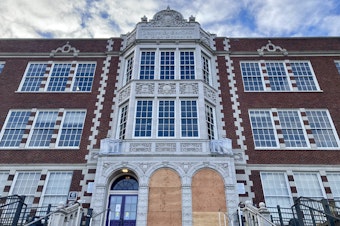
Seattle's Garfield High School celebrates 100 years
This weekend, Garfield High School will celebrate its centennial. Technically, that 100-year mark happened two years ago, but because of the pandemic, that celebration was delayed until this coming Saturday, Aug. 27.
-

Changes in law enforcement may be leading to fewer guns at home
The City and County of Spokane have seen an unprecedented number of gun removals so far this year. And while there are different reasons a person can have firearms removed from their home, some of this increase appears to be driven by a change in how courts are treating domestic violence protection orders.
-

Remembering August Wilson's Seattle legacy
August Wilson's "Century Cycle," comprised of 10 plays detailing and exploring the life of African Americans throughout the 1900s, is famously set in his hometown of Pittsburgh. But for the last 15 years of his life Wilson lived in Seattle, drawing inspiration from café windows and conversations at the local IHOP.
-

'The Queer Agenda:' A summer road trip with a purpose
For many, summer road trips are a rite of passage — and a chance to visit weird roadside attractions and eat a lot of fast food. But for a few Snohomish residents, their road trip came with a mission.