Libby Denkmann
Host, Soundside
About
Libby Denkmann has covered veterans' issues, homelessness, and local politics during her radio journalism career. She became the host of KUOW's Soundside in November 2021. Previously she was a producer, reporter, anchor, and host for stations KIRO, KFI, and KPCC in Seattle and Los Angeles. During a yearlong hiatus from journalism in 2011, she worked as a congressional staffer in Washington, D.C.. Libby was born in Seattle, grew up on the eastside, and graduated from the University of Washington. Her favorite things include soccer, video games, and her dog, Monty.
Location: Seattle
Languages: English, limited Japanese and Portuguese
Pronouns: she/her
Podcasts


Stories
-

The disgusting, and fascinating, case of the worm in the oyster
If you’ve shucked an oyster from Washington State recently, you might have noticed something new. Black blisters on the meat of the oyster. Researchers are attributing many of these blisters to a parasite they’ve never seen before.
-
Delivery apps boomed during the pandemic. Gig workers say it's time for companies to pay up.
It's a pandemic story we all know pretty well at this point:
-

Washington just designated its first seagrass sanctuary. Here's why
Last month, the state of Washington announced a new kelp and eelgrass protection zone off the shores of Everett. Covering roughly 2,300 acres, this marine plant sanctuary is the first of its kind. Officials hope the designation will help preserve the vital ecosystem seagrass provides, while also opening an avenue to understand the threats seagrasses face.
-

What does it mean to 're-Indigenize' contemporary diets?
Dr. Charlotte Coté is the author of A Drum in One Hand, a Sockeye in the Other: Stories of Indigenous Food Sovereignty from the Northwest Coast, and she sat down with Libby Denkmann to discuss "decolonizing" native diets.
-

Voice of the farmworker: How Spanish-language radio cultivated community in Yakima Valley
Soundside host Libby Denkmann talked to author Monica De La Torre about the Chicano and Chicana organizers who came together in 1976 to create a Spanish-language community radio station in the Yakima Valley. They discussed the groundbreaking programming Radio Cadena produced and the women behind it.
-
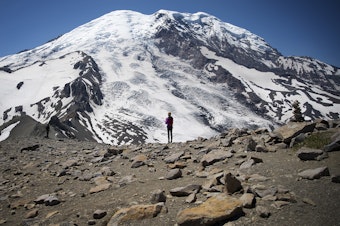
New to the outdoors? These volunteers will teach you to explore safely
When the best laid plans go south, and you're stuck in the wild either lost or hurt, Seattle Mountain Rescue springs into action to get you home safe. The volunteer team covers a wide area from Seattle city proper to the Cascades, and after 70 years they're finally close to getting a new base of operations in North Bend. Additionally, a recent study from the Black Washingtonians Workgroup on Outdoor Recreation found fewer than 1.5% of State Parks visitors are Black. So how can Washington improve access to its famed outdoors?
-

Major toothache: A look inside dental care in Washington
For years the Seattle King County Clinic provided free medical, eye and dental care for thousands of people. After taking a break in 2021, this was supposed to be the grand return. But after a scheduling mishap, the dental clinic has been canceled this year.
-
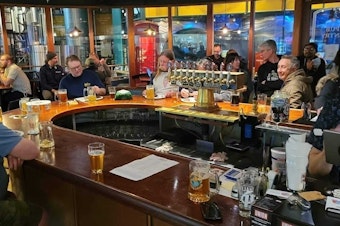
It's the end of an era as Hale's Ales pulls their final pint
Hale's Ales founder Mike Hale sits down with Soundside host Libby Denkmann to talk the history of Hale's and why they're pulling the plug now.
-
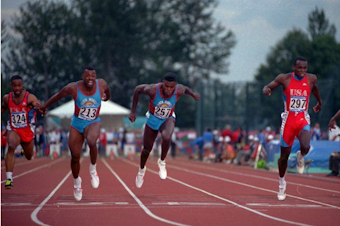
The Goodwill Games sought to pull politics from sports. So why did they end?
If you were around Seattle in 1990 — or watching Turner Broadcasting channels anywhere in America — you may remember the "Goodwill Games." The games faded out by 2001. What happened?
-

What our poop tells us: Wastewater surveillance examines what most of us would prefer to flush and forget
You've probably taken part in one of the new frontiers of public health research: wastewater surveillance. All that's needed is a sample from down the drain: poop or pee. Our feces and urine are helpful indicators in detecting all sorts of outbreaks and infections. And wastewater surveillance can give scientists a preview of new viruses and disease variants, patterns of drug usage, and much more. Including potentially assessing the next pandemic.